20+
Years Of Experience
Restoring Function and Safety Around Pool Areas
Pool Repairs in Wellford for properties with damaged concrete, pavers, or pool decking requiring structural and surface restoration
Pool decks crack when the soil beneath settles unevenly or when freeze-thaw cycles exploit joints that weren't sealed properly during initial installation, leaving trip hazards and allowing water to penetrate and worsen the damage. Across Wellford, pool areas see accelerated wear from repeated wet-dry cycles, chemical exposure, and concentrated foot traffic along entry and exit routes. Baires Masonry Solution repairs pool decking, surrounding concrete surfaces, and paver installations using methods that address the underlying cause—whether that's base failure, improper drainage, or surface material breakdown—so the repair holds rather than failing again within a season or two.
Pool repair work involves removing damaged sections to expose base conditions, correcting drainage grades that direct water away from the pool shell, and replacing concrete or resetting pavers with materials that match existing installations. Expansion joints are re-established at proper intervals, and surface finishes are selected for slip resistance in constantly wet conditions.
Request a pool repair inspection and estimate to identify the extent of damage and what base corrections the repair requires.
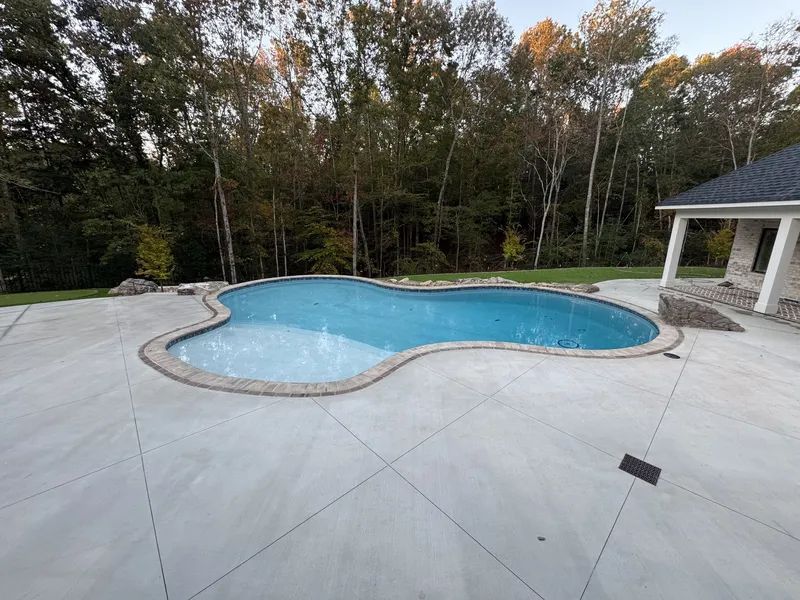
What Visibly Changes After Pool Area Repairs
Repair work begins with assessment of whether cracks and settlement stem from subgrade failure, tree root intrusion, or surface-only damage that doesn't require base reconstruction. Damaged concrete is saw-cut along clean lines to establish repair boundaries, and pavers are lifted and stacked for reinstallation after base correction. New concrete is tied into existing slabs with dowels or bonding agents, and control joints are cut to match existing patterns and direct future cracking into planned locations.
After repairs are complete, surfaces are level and stable underfoot, with no height differences at joints that create tripping hazards or allow water to collect in depressions. Cracks are eliminated and the deck sheds water toward drainage points rather than ponding near the pool edge or against the house foundation. Color and texture matching integrates the repair into the surrounding deck, and slip resistance is restored across areas where surface deterioration had created smooth, hazardous spots. The deck supports furniture placement and regular use without deflection or additional cracking along repair boundaries.
Pool repair projects often reveal secondary issues like coping stones that have loosened from repeated water exposure or perimeter drains that have clogged and need cleaning to prevent water from undermining adjacent sections. Paver repairs include edge restraint verification and joint sand replacement using polymeric products that resist washout better than standard sand. For properties preparing for seasonal pool opening, timely repairs prevent further deterioration and ensure safe access around the pool perimeter throughout the swimming season.
What Homeowners Usually Ask
Pool owners facing deck damage and surface deterioration want to know what causes the problems and how repairs prevent recurrence as the pool continues daily use.
What causes pool deck concrete to crack?
Pool decks crack from settlement when base materials weren't properly compacted during initial installation, from freeze-thaw damage when water penetrates unsealed joints, or from tree roots expanding beneath the slab and lifting sections unevenly.
How do repair sections integrate with existing pool decking?
Repairs use saw-cut boundaries that create clean edges, mechanical tie-ins or bonding agents that connect new concrete to old, and finishing techniques that match existing texture and color as closely as material variations allow.
When should pool repairs happen relative to the swimming season?
Repairs are best scheduled during off-season months or early spring before pools open, allowing concrete to cure fully and giving repairs time to stabilize before heavy use begins.
What makes pool deck surfaces slip-resistant?
Textured finishes like broom patterns or exposed aggregate provide traction in wet conditions, while smooth troweled surfaces become hazardous around pools where water constantly wets the deck during use.
How long do pool deck repairs last?
Properly executed repairs that address underlying base and drainage problems last as long as the surrounding original installation, though repairs made without correcting the root cause typically fail again within a few seasons.
Baires Masonry Solution assesses pool deck damage to determine whether surface repair is sufficient or whether base reconstruction is necessary for lasting results, using outdoor construction experience developed across residential properties in the area. Arrange a pool repair inspection to review your deck's condition and discuss repair options before the start of swimming season.