20+
Years Of Experience
Surfaces Designed for Continuous Outdoor Exposure
Pavers Installation in Wellford for outdoor areas requiring durable, low-maintenance surfaces that resist shifting and maintain visual appeal through weather cycles
Uneven outdoor surfaces, cracked concrete patios, and deteriorating walkways signal the need for paver installations that provide stable footing and visual cohesion across outdoor living areas. Baires Masonry Solution designs custom paver installations for patios, walkways, pool areas, driveways, and outdoor gathering spaces, working with homeowners to select colors, styles, and layout patterns that complement existing architecture while meeting functional requirements. Pavers installed throughout the Upstate region perform reliably because installation methods account for South Carolina's clay soils that expand when wet and contract during dry periods, creating movement that poorly installed surfaces cannot accommodate without developing gaps or uneven sections.
Paver installation requires excavating to depth that allows proper base thickness, placing geotextile fabric that prevents base stone from mixing with underlying soil, and compacting crushed stone in layers that provide uniform support. Edge restraints installed along perimeters contain lateral movement that occurs as pavers endure foot traffic and temperature changes. Joint sand swept between pavers locks units together, distributing loads across multiple pieces rather than allowing individual pavers to rock or settle independently.
Schedule a design consultation to review paver styles, pattern options, and installation approaches suited to your outdoor space dimensions and intended use.
The Difference Between Proper and Inadequate Installation
Quality paver installation depends on base depth calculated for soil type and expected use, with pool areas and driveways requiring deeper aggregate layers than low-traffic walkways. Baires Masonry Solution employs installation sequences that prevent common failure patterns, including inadequate compaction that allows settling, missing edge restraints that permit spreading, and improper joint sand that washes out during heavy rain. Planning accounts for drainage slopes, integration with existing landscaping, and how paver surfaces transition to adjacent concrete or stone features.
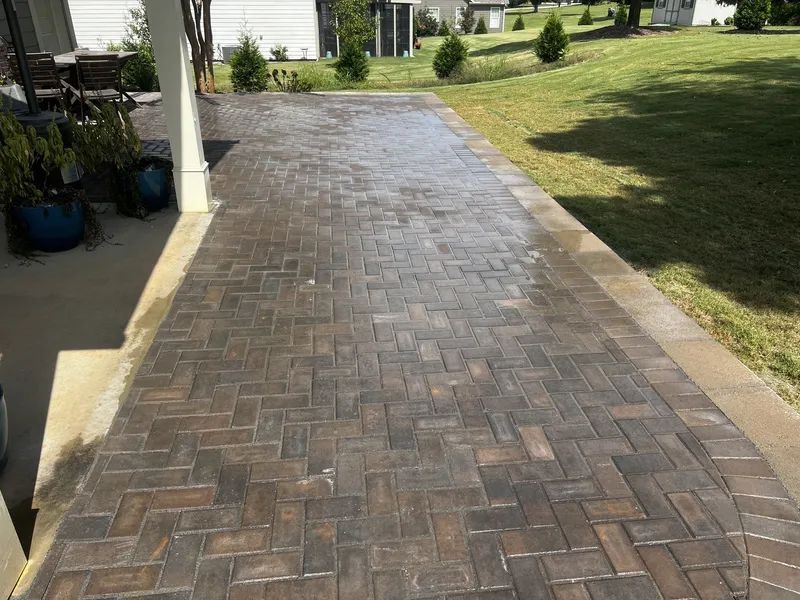
Completed paver installations show uniform joint spacing without gaps where weeds grow or sand erodes, surfaces that remain level without developing low spots that collect water, and edges that stay defined without pavers shifting outward from their original layout. Colors and patterns appear consistent across the entire installation. You walk on surfaces that feel solid underfoot without the rocking sensation that indicates voids beneath individual units.
Installation projects include excavation, base preparation, paver placement, and joint finishing, though landscape modifications, irrigation adjustments, and outdoor lighting installation require separate coordination. Paver selection involves trade-offs between natural stone authenticity and manufactured product uniformity, with maintenance requirements varying based on surface texture and joint width that affect how debris accumulates and how easily surfaces clean.
Questions Before Starting Your Project
Paver installation decisions benefit from understanding material options, installation variables, and performance expectations for outdoor surfaces in regional conditions.
What base preparation prevents pavers from shifting over time?
Properly compacted crushed stone base extending six to eight inches deep provides stable support, while edge restraints installed along all perimeters contain outward movement that occurs as pavers experience temperature changes and traffic loads.
How do paver installations handle Wellford's seasonal rainfall?
Permeable base layers allow water to drain through rather than pooling beneath pavers, and proper grading directs surface runoff away from structures, preventing saturation that softens supporting soils and causes settling.
Why do some paver patios develop uneven areas after installation?
Settling happens when base compaction was inadequate or when edge restraints fail to contain lateral movement, allowing individual pavers to drop or shift as underlying support erodes during rain events.
What variety of colors and patterns work for different outdoor spaces?
Paver manufacturers offer dozens of color blends and sizes that create patterns from simple running bond layouts to complex herringbone and circular designs, with selection depending on architectural style and personal preference.
When does joint sand between pavers need replenishment?
Polymeric sand used in properly installed joints resists washout but may require reapplication every few years depending on weather exposure and how frequently the surface is pressure washed or subjected to heavy runoff.
Baires Masonry Solution matches paver selections to outdoor space requirements and applies responsive communication throughout project planning and installation phases. Talk through your paver project ideas and explore design possibilities that fit your property layout and budget parameters.